- COVID-19 Update
- Are you a HHA, CNA or a Nurse Join our Silver Sitters team.


 Schedule Consultation

Medical Tests To Diagnose Alzheimer Among Seniors
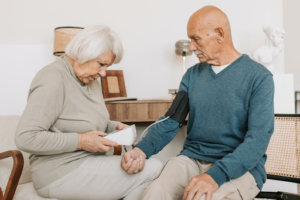
As such, there is no single Alzheimer’s test to determine whether the senior is suffering from Alzheimer’s or not. At present, Alzheimer’s disease among seniors is only confirmed after death by conducting an examination of brain tissue in an autopsy.
Still, doctors or medical professionals have some tests which can find out if the seniors have Alzheimer’s disease or not. But you need to keep in mind that mental and physical tests are conducted to rule out the causes of symptoms, not Alzheimer’s.
Consequently, let us learn about the variety of medical tests to diagnose Alzheimer’s disease among seniors.
Medical Tests To Diagnose Alzheimer Disease
There are many different tests that medical professionals do to get a comprehensive picture of a senior’s health and determine if Alzheimer’s is present. Let’s take note of all the tests done to predict Alzheimer’s among seniors.
Checking complete medical history
The first thing a doctor does is to gather seniors’ complete medical history along with their medications. Besides this, the doctor may also ask you for a family history to check if the problem is genetic or due to lifestyle factors.
Physical testing
The medical professional can also conduct physical examinations or laboratory tests to rule out certain conditions such as vitamin deficiency, kidney issues, thyroid, diabetes, or any side effects that can cause Alzheimer’s. Besides this, the blood tests, urine tests, and functional abilities of seniors can also be checked.
Genetic testing
Certain genes are known to increase the risk of developing Alzheimer’s disease (AD), with a rare form called early-onset autosomal dominant Alzheimer’s disease (ADAD) being hereditary. ADAD, accounting for less than 1% of cases, often presents symptoms earlier in life.
The APOE-e4 gene significantly increases the risk of developing AD. While a blood test can detect this gene, its presence doesn’t guarantee AD development but indicates a higher risk. While knowing one’s genetic predisposition might prompt preventive lifestyle changes, the genetic test is contentious and typically not covered by health insurance.
Neurological testing
As the name indicates, neurological testing assesses the senior’s reflexes, eye movements, speech, and eye coordination to see if neurological disorders might be causing Alzheimer’s disease among seniors. Some symptoms include accumulation of fluid around the brain, Parkinson’s disease, and brain tumors.
Cognitive testing
The physician can also perform mental status testing if the cause of memory loss is still not known. In cognitive testing, two tests will be done, the Mini-Mental Exam (MMSE) and the Mini-Cog.
The MMSE will check if the seniors can remember certain words or instructions. On the contrary, Mini-cog is a very brief test measuring mental functioning and a patient’s ability to draw a clock.
Article Sources

Aging Care. “Medical Tests Used to Diagnose Alzheimer’s Disease”. Aging Care,
Medical Tests Used to Diagnose Alzheimer’s Disease – AgingCare.com
How are we doing?
Submit a review and let us know what
you think about our services.
Complimentary
In-Home Care Assessment
Call us today to schedule a care assessment and speak
with your local Silver Sitters Care Manager
Careers at
Silver Sitters
Join a team who makes a difference in the lives
of our beloved Seniors
 Call Us