

 Schedule Consultation

Exercises To Reduce Swelling In Ankles Among Seniors In Broward County
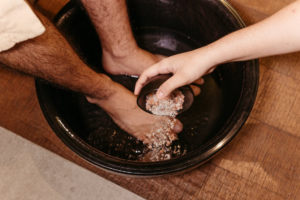
Swollen Ankles among seniors in Broward County happen when the body does not circulate fluids away from extremities and peripheral regions. As such, this can occur in people of all ages but is more common among seniors in Broward County.
Swollen ankles among seniors affect their mobility and cause them discomfort. Fortunately, seniors can now manage swollen ankles by doing certain exercises and by taking foods that help seniors with joint pain and swelling.
Consequently, let’s have an insight into how exercise can ease swelling among seniors in Broward County.
Exercises For Treating Swollen Ankles Among Seniors in Broward County
Tennis Ball Massage
Tennis ball massage exercise contributes to the better health of the feet and ankles by improving blood circulation among seniors. Seniors need to stand upright and put a tennis ball under the arch of their foot. With the sole, seniors need to roll the ball from heel to toe and continue this for 30 seconds. Repeat this with another foot as well.
Resistance band exercise
The next exercise for treating swollen ankles among seniors in Broward County is resistance band exercise. To begin this, seniors need to hold their feet together, sit down with their legs stretched out, and pull the distal ends of their feet away. Seniors need to hold this position for some seconds and then repeat this several times throughout the day.
Single knee raises
The exercise for managing swollen ankles involves lying on the back and alternately pulling each knee up to the chest as closely as possible without causing discomfort, then returning the leg to its resting position.
While performing the exercise on one leg, the other leg should remain resting to reduce strain on the back. Although there is no standard routine, it is suggested that seniors should perform ten repetitions for each leg, three times daily.
Squeezing glutes
Another exercise seniors in Broward County can practice to reduce swelling around their ankles is squeezing glutes. Initially, this exercise might not seem effective to you but is a good exercise to reduce leg swelling and promote circulation within the entire leg.
Seniors should perform this exercise while sitting or lying down. Also, ask seniors to follow the guidelines while performing this exercise such as starting by tightening the glutes, holding this for some seconds, and repeating this action at least 3 times a day.
Seniors in Broward County should breathe deeply and maintain proper oxygen and blood circulation levels while performing this exercise.
Ankle pumps
One of the most popular exercises for swollen ankles is ankle pumps. Seniors need to lay on their backs, raise their feet, and point their toes up and then down. Make sure seniors perform this action on each foot at least 3 times a day. It is highly recommended that seniors perform this exercise by lying down.
Article Sources

Seasons Retirement Communities. “6 Simple Exercises for Swollen Ankles”. Seasons Retirement Communities,
6 Simple Exercises for Swollen Ankles | Seasons Retirement Communities
How are we doing?
Submit a review and let us know what
you think about our services.
Complimentary
In-Home Care Assessment
Call us today to schedule a care assessment and speak
with your local Silver Sitters Care Manager
Careers at
Silver Sitters
Join a team who makes a difference in the lives
of our beloved Seniors
 Call Us